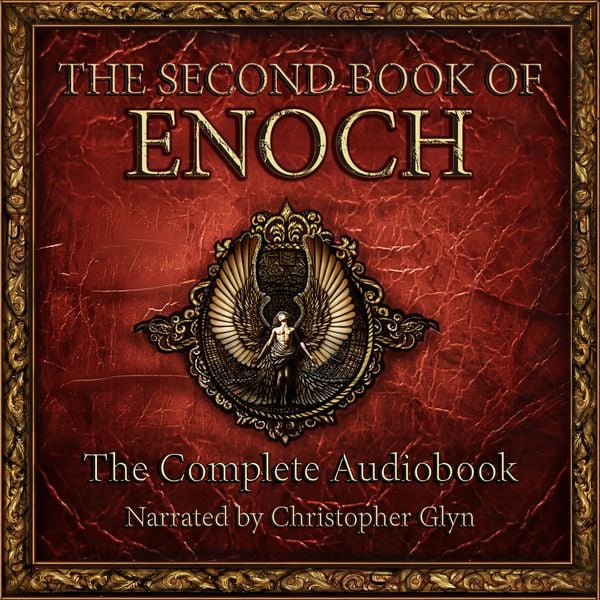
The Second Book of Enoch
Christopher Glyn
Ungekürzt
•
9781914988974
1 Stunde 28 Minuten

Einige Artikel enthalten Affiliate-Links (gekennzeichnet mit einem Sternchen *). Wenn ihr auf diese Links klickt und Produkte kauft, erhalten wir eine kleine Provision, ohne dass für euch zusätzliche Kosten entstehen. Eure Unterstützung hilft, diese Seite am Laufen zu halten und weiterhin nützlichen Content zu erstellen. Danke für eure Unterstützung!
Vom Herausgeber
The Second Book of Enoch, also known as the Slavonic Enoch or 2 Enoch, is an ancient religious text that is part of the Jewish apocalyptic tradition. It is considered pseudepigraphical, attributed to the biblical figure Enoch, who was said to have been taken up to heaven and shown divine revelations. The book exists in various versions, with the most well-known being the Slavonic manuscript preserved in the Russian National Library. The Second Book of Enoch is comprised of several sections that offer a glimpse into cosmology, theology, and eschatology. While the book does not hold canonical status in most branches of Judaism or Christianity, it has had a significant impact on the development of apocalyptic and mystical thought in these traditions. The book begins with Enoch's ascent through the heavens, guided by angels, where he encounters heavenly mysteries and gains insights into the workings of the universe. Much of the text involves descriptions of heavenly realms and the hierarchy of angels, as well as Enoch's conversations with these angelic beings. The book also delves into themes such as the creation of the world, the nature of the cosmos, and the destinies of both the righteous and the wicked. The book's apocalyptic elements come to the fore in its discussions of the final judgment, the fate of the fallen angels, and the eventual establishment of God's kingdom on Earth. Through vivid imagery and symbolic language, the book conveys a vision of the ultimate triumph of good over evil, with God's justice prevailing in the end. Overall, the Second Book of Enoch offers readers a unique insight into the imaginative and theological landscape of late antiquity. Its blend of celestial journeys, angelic hierarchies, and eschatological themes has made it a fascinating subject of study for scholars interested in ancient religious literature, mysticism, and apocalyptic thought.
Beifall für dieses Ensemble

Whitestone Media
-
Cover - Christopher Glyn - The Book Of Tobit
 Christopher Glyn: The Book Of TobitThe Book Of TobitChristopher Glyn
 -
Cover - Christopher Glyn - The Book of Isaiah
 Christopher Glyn: The Book of IsaiahThe Book of IsaiahChristopher Glyn
 -
Cover - Christopher Glyn - The Book Of Susanna
 Christopher Glyn: The Book Of SusannaThe Book Of SusannaChristopher Glyn
 -
Cover - Christopher Glyn - Second Book Of Maccabees
 Christopher Glyn: Second Book Of MaccabeesSecond Book Of MaccabeesChristopher Glyn
 -
Cover - Christopher Glyn - The Book of Baruch
 Christopher Glyn: The Book of BaruchThe Book of BaruchChristopher Glyn
 -
Cover - Christopher Glyn - The Book Of Ecclesiasticus
 Christopher Glyn: The Book Of EcclesiasticusThe Book Of EcclesiasticusChristopher Glyn