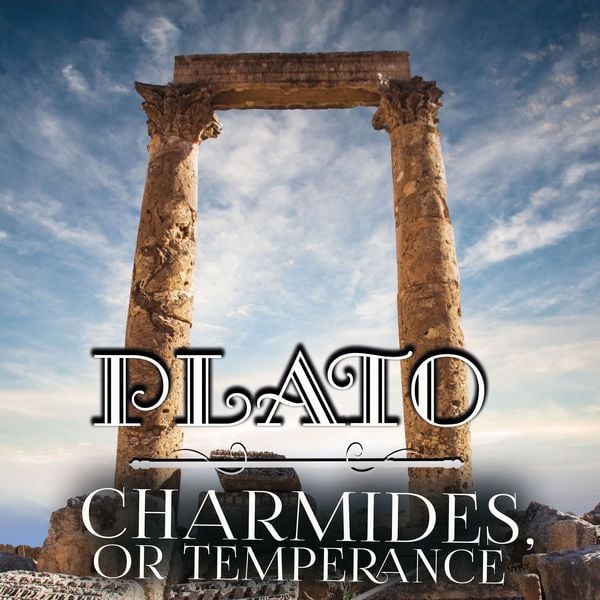
Charmides, or Temperance
Plato
Unabridged
•
4099995467017
1 hour 1 minute

Some articles contain affiliate links (marked with an asterisk *). If you click on these links and purchase products, we will receive a small commission at no extra cost to you. Your support helps to keep this site running and to continue creating useful content. Thank you for your support!
From the publisher
The Charmides is a dialogue of Plato, in which Socrates engages a handsome and popular boy named Charmides in a conversation about the meaning of sophrosyne, a Greek word usually translated into English as 'temperance,' 'self-control,' or 'restraint.' When the boy is unable to satisfy him with an answer, he next turns to the boy's mentor Critias. In the dialogue, Charmides and then later Critias champion that Temperance is 'doing one's own work' but Socrates derides this as vague. The definition given next of 'knowing oneself' seems promising but the question is then raised if something can even have the knowledge of itself as a base. As is typical with Platonic early dialogues, the two never arrive at a completely satisfactory definition, but the discussion nevertheless raises many important points.
From the same authors


Strelbytskyy Multimedia Publishing
-
Cover - A. S. Pushkin - Baryishnya-krestyanka
 A. S. Pushkin: Baryishnya-krestyankaBaryishnya-krestyankaA. S. Pushkin
 -
Cover - Alexander Pushkin - Istoriya Pugachyova
 Alexander Pushkin: Istoriya PugachyovaIstoriya PugachyovaAlexander Pushkin
 -
Cover - Alexander Pushkin - Pesn' o veschem Olege
 Alexander Pushkin: Pesn' o veschem OlegePesn' o veschem OlegeAlexander Pushkin
 -
Cover - Taras Shevchenko - Kobzar. Za vydannyam 1840 roku taras ...
 Taras Shevchenko: Kobzar. Za vydannyam 1840 roku taras ...Kobzar. Za vydannyam 1840 roku taras ...Taras Shevchenko
 -
Cover - Alexander Pushkin - Roman v pismah
 Alexander Pushkin: Roman v pismahRoman v pismahAlexander Pushkin