
Global Basics 101 - Your Series for Modern Knowledge
Global Basics 101 - Your Series for Modern Knowledge - Folge 7 - The Painter Vincent van Gogh - The Life and Works of a Manic Genius
Bert Alexander Petzold
ungekürzt
1 hour 14 minutes
Note: Costs may be incurred for playing the audio books or audio plays on the respective platforms, e.g. Spotify. Lismio has no influence on which audiobooks and audio plays are available on the service.
Some articles contain affiliate links (marked with an asterisk *). If you click on these links and purchase products, we will receive a small commission at no extra cost to you. Your support helps to keep this site running and to continue creating useful content. Thank you for your support!
From the publisher
Anyone who knows Vincent van Gogh only as a tragic myth has seen only the frame. This non-fiction book goes straight to the paintings and shows how radical colour, urgent brushwork and a searching mind helped push Impressionism into Post-Impressionism and shape modern art. Author and editor Bert Alexander Petzold offers a fact-rich, entertaining, clearly structured tour that replaces legend with usable knowledge: how to place works, read motifs, and see why the paint feels so immediate.
Born on 30 March 1853 in Groot Zundert, the pastor's son tried several paths - Goupil & Cie. in The Hague, London and Paris, teaching and lay preaching - before committing to art in 1880. From Brussels, Etten and The Hague he developed his early realism and painted 'The Potato Eaters'. In Paris (1886), living with his brother Theo, he met the avant-garde, absorbed Impressionism, and brightened his palette in works such as 'Self-Portrait with Grey Felt Hat' and 'Flowering Orchard', forging a style that intensified rather than imitated.
Arles in 1888 brought the southern light and iconic images - 'The Bedroom', 'Starry Night Over the Rhône', 'Café Terrace at Night' - as well as the dream of an artists' community. The collapse of his partnership with Paul Gauguin led to crisis and, in 1889, to Saint-Rémy, where unrest and discipline produced paintings of extraordinary force, including 'The Starry Night', 'Cypresses', 'Wheat Field with Cypresses' and the 'Sunflowers'. In May 1890 he moved to Auvers-sur-Oise near Dr Paul Gachet and Theo, made nearly eighty pictures in weeks-among them 'Portrait of Dr Gachet' and 'Wheatfield with Crows' - and died on 29 July 1890 after shooting himself.
Perfect for GCSE and A-level revision as well as university study, the book uses biography and masterpieces as a key to looking, so you can not only recognise Van Gogh but truly understand him.
Born on 30 March 1853 in Groot Zundert, the pastor's son tried several paths - Goupil & Cie. in The Hague, London and Paris, teaching and lay preaching - before committing to art in 1880. From Brussels, Etten and The Hague he developed his early realism and painted 'The Potato Eaters'. In Paris (1886), living with his brother Theo, he met the avant-garde, absorbed Impressionism, and brightened his palette in works such as 'Self-Portrait with Grey Felt Hat' and 'Flowering Orchard', forging a style that intensified rather than imitated.
Arles in 1888 brought the southern light and iconic images - 'The Bedroom', 'Starry Night Over the Rhône', 'Café Terrace at Night' - as well as the dream of an artists' community. The collapse of his partnership with Paul Gauguin led to crisis and, in 1889, to Saint-Rémy, where unrest and discipline produced paintings of extraordinary force, including 'The Starry Night', 'Cypresses', 'Wheat Field with Cypresses' and the 'Sunflowers'. In May 1890 he moved to Auvers-sur-Oise near Dr Paul Gachet and Theo, made nearly eighty pictures in weeks-among them 'Portrait of Dr Gachet' and 'Wheatfield with Crows' - and died on 29 July 1890 after shooting himself.
Perfect for GCSE and A-level revision as well as university study, the book uses biography and masterpieces as a key to looking, so you can not only recognise Van Gogh but truly understand him.
From the same authors


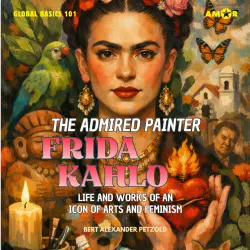
Amor Audiobook
-
Cover - Dramen erleben! - Folge 5 - Nathan der Weise - Schauspiel mit Erläuterungen
 Dramen erleben!: Folge 5 - Nathan der Weise - Schauspiel mit ErläuterungenSeriesFolge 5 - Nathan der Weise - Schauspiel mit ErläuterungenDramen erleben!
 -
Cover - Hörzeit für die Kleinsten - Lenya und Moritz entdecken einen Brand - Folge 1 - Die Feuerwehr rückt aus
 Hörzeit für die Kleinsten: Lenya und Moritz entdecken einen Brand - Folge 1 - Die Feuerwehr rückt ausSeriesLenya und Moritz entdecken einen Brand - Folge 1 - Die Feuerwehr rückt ausHörzeit für die Kleinsten
 -
Cover - Alle Abenteuer des kleinen Prinzen - Folge 4 - Der kleine Prinz als Blumenretter
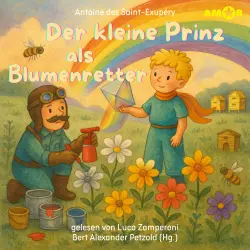 Alle Abenteuer des kleinen Prinzen: Folge 4 - Der kleine Prinz als BlumenretterSeriesFolge 4 - Der kleine Prinz als BlumenretterAlle Abenteuer des kleinen Prinzen
 -
Cover - Kinder lernen Klassik kennen - Folge 4 - Hänsel und Gretel, eine Märchenoper
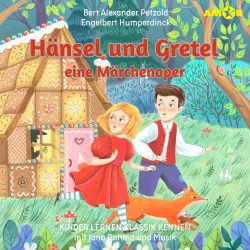 Kinder lernen Klassik kennen: Folge 4 - Hänsel und Gretel, eine MärchenoperSeriesFolge 4 - Hänsel und Gretel, eine MärchenoperKinder lernen Klassik kennen
 -
Cover - Oper und Ballet als Hörspiel mit Musik - Folge 2 - La Traviata
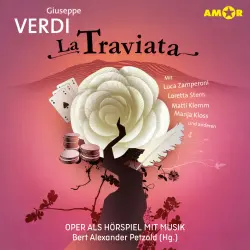 Oper und Ballet als Hörspiel mit Musik: Folge 2 - La TraviataSeriesFolge 2 - La TraviataOper und Ballet als Hörspiel mit Musik
 -
Cover - Oper und Ballet als Hörspiel mit Musik - Folge 13 - Tristan und Isolde
 Oper und Ballet als Hörspiel mit Musik: Folge 13 - Tristan und IsoldeSeriesFolge 13 - Tristan und IsoldeOper und Ballet als Hörspiel mit Musik
 -
Cover - Classics for Children - Audio Dramas with Music - The Magic Flute - Episode 2
 Classics for Children - Audio Dramas with Music: The Magic Flute - Episode 2SeriesThe Magic Flute - Episode 2Classics for Children - Audio Dramas with Music