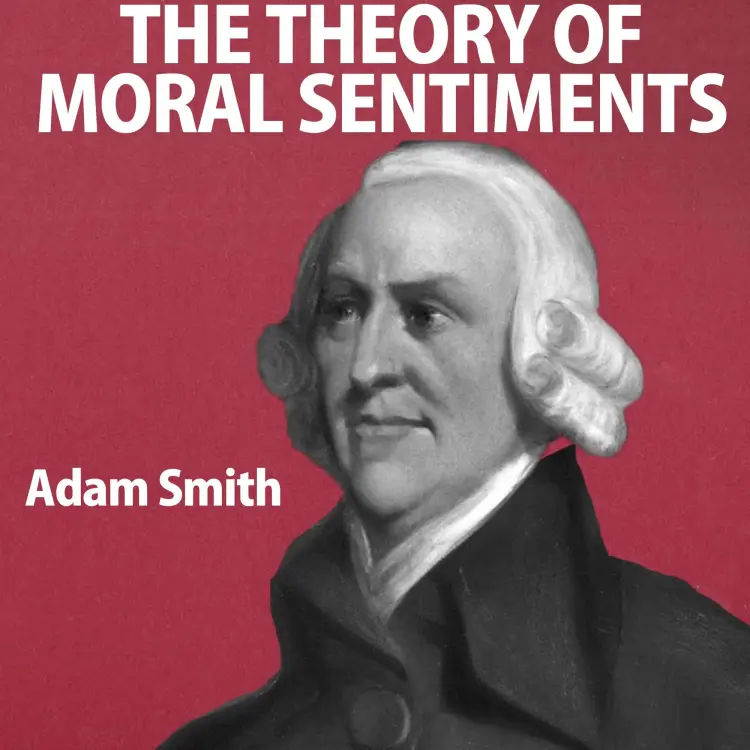
The Theory of Moral Sentiments
Adam Smith
Unabridged
•
4066004158075
16 horas 48 minutos

Nota: La reproducción de los audiolibros o de las obras de audio en las respectivas plataformas, por ejemplo Spotify, puede generar gastos. Lismio no tiene ninguna influencia sobre qué audiolibros y obras de audio están disponibles en el servicio.
Algunos artículos contienen enlaces de afiliados (marcados con un asterisco *). Si hace clic en estos enlaces y compra productos, recibiremos una pequeña comisión sin coste adicional para usted. Su apoyo ayuda a mantener este sitio en funcionamiento y a seguir creando contenidos útiles. Gracias por su apoyo.
De la editorial
Adam Smith (1723-1790) was a Scottish social philosopher and a pioneer of political economy. One of the key figures of the Scottish Enlightenment, Smith is the author of The Theory of Moral Sentiments and An Inquiry into the Nature and Causes of the Wealth of Nations. The latter, usually abbreviated as The Wealth of Nations, is considered his magnum opus and the first modern work of economics. It earned him an enormous reputation and would become one of the most influential works on economics ever published.
Smith is widely cited as the father of modern economics and capitalism. Smith studied social philosophy at the University of Glasgow and the University of Oxford. After graduating, he delivered a successful series of public lectures at Edinburgh, leading him to collaborate with David Hume during the Scottish Enlightenment. Smith obtained a professorship at Glasgow teaching moral philosophy, and during this time he wrote and published The Theory of Moral Sentiments. In his later life, he took a tutoring position that allowed him to travel throughout Europe, where he met other intellectual leaders of his day. Smith returned home and spent the next ten years writing The Wealth of Nations, publishing it in 1776. He died in 1790.
Smith is widely cited as the father of modern economics and capitalism. Smith studied social philosophy at the University of Glasgow and the University of Oxford. After graduating, he delivered a successful series of public lectures at Edinburgh, leading him to collaborate with David Hume during the Scottish Enlightenment. Smith obtained a professorship at Glasgow teaching moral philosophy, and during this time he wrote and published The Theory of Moral Sentiments. In his later life, he took a tutoring position that allowed him to travel throughout Europe, where he met other intellectual leaders of his day. Smith returned home and spent the next ten years writing The Wealth of Nations, publishing it in 1776. He died in 1790.
Del mismo autor


Author's Republic
-
Cover - Xavier Hudson - Secrets of Closing the Sale - The Ultimate Guide on How To Perfectly Close a Sale, Discover Effective Closing Techniques and Secrets That Would Make You a Successful Closer
 Xavier Hudson: Secrets of Closing the Sale - The Ultimate Guide on How To Perfectly Close a Sale, Discover Effective Closing Techniques and Secrets That Would Make You a Successful CloserSecrets of Closing the Sale - The Ultimate Guide on How To Perfectly Close a Sale, Discover Effective Closing Techniques and Secrets That Would Make You a Successful CloserXavier Hudson
 -
Cover - Danielle Frau - Nodo The Chair's Mover
 Danielle Frau: Nodo The Chair's MoverNodo The Chair's MoverDanielle Frau
 -
Cover - Mary Charleston Boyd - Charles Dickens Inspired A Christmas Gang
 Mary Charleston Boyd: Charles Dickens Inspired A Christmas GangCharles Dickens Inspired A Christmas GangMary Charleston Boyd
 -
Cover - Allen A. Hebert - Abuse of Trust
 Allen A. Hebert: Abuse of TrustAbuse of TrustAllen A. Hebert
 -
Cover - Kim York - Successful Coaching - The Ultimate Guide on How to Start a Coaching Business, Learn Powerful Tips on How to Build Your Coaching Skills and Start Your Own Coaching Business
 Kim York: Successful Coaching - The Ultimate Guide on How to Start a Coaching Business, Learn Powerful Tips on How to Build Your Coaching Skills and Start Your Own Coaching BusinessSuccessful Coaching - The Ultimate Guide on How to Start a Coaching Business, Learn Powerful Tips on How to Build Your Coaching Skills and Start Your Own Coaching BusinessKim York
 -
Cover - Henry David Thoreau - Civil Disobedience
 Henry David Thoreau: Civil DisobedienceCivil DisobedienceHenry David Thoreau
 -
Cover - Accelerated Learning - Accelerated Learning - The Ultimate Guide to Remembering Anything Faster, Longer, Better! Boost Your Photographic Memory, Productivity, Double Reading Speed and Remember Names Better
 Accelerated Learning: Accelerated Learning - The Ultimate Guide to Remembering Anything Faster, Longer, Better! Boost Your Photographic Memory, Productivity, Double Reading Speed and Remember Names BetterAccelerated Learning - The Ultimate Guide to Remembering Anything Faster, Longer, Better! Boost Your Photographic Memory, Productivity, Double Reading Speed and Remember Names BetterAccelerated Learning