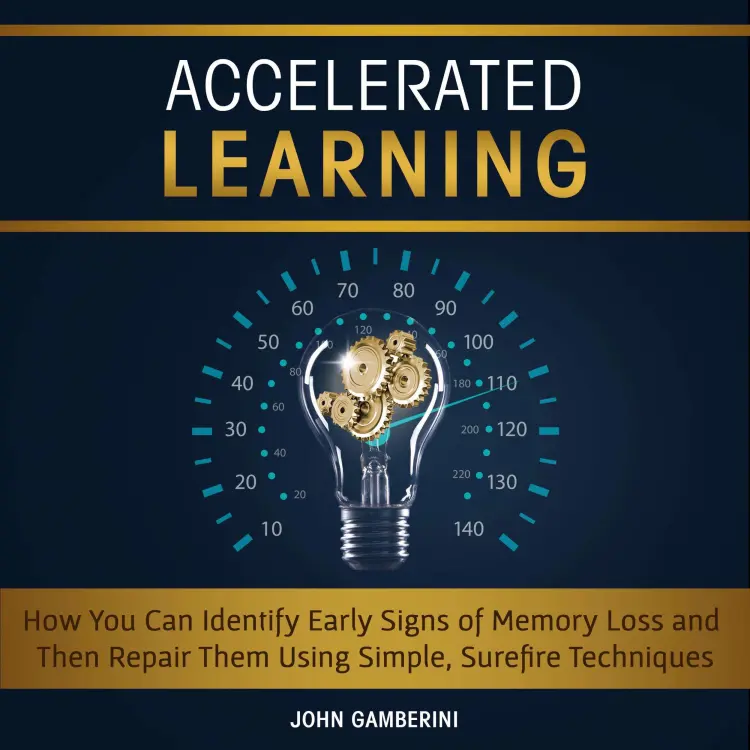
Accelerated Learning - How You Can Identify Early Signs of Memory Loss and Then Repair Them Using Simple Techniques
John Gamberini
Unabridged
2 horas 1 minuto
Nota: La reproducción de los audiolibros o de las obras de audio en las respectivas plataformas, por ejemplo Spotify, puede generar gastos. Lismio no tiene ninguna influencia sobre qué audiolibros y obras de audio están disponibles en el servicio.
Algunos artículos contienen enlaces de afiliados (marcados con un asterisco *). Si hace clic en estos enlaces y compra productos, recibiremos una pequeña comisión sin coste adicional para usted. Su apoyo ayuda a mantener este sitio en funcionamiento y a seguir creando contenidos útiles. Gracias por su apoyo.
De la editorial
If you're worried about your memory loss potentially leading to Alzheimer's or dementia, then this will be the most important message you ever read. Did you know memory loss can occur for up to 15 years before you notice any issues? But once the issues do appear it's often too late because memory decline happens rapidly, often in a matter of months.
In fact, the American Alzheimer's Association estimates that one in nine Americans will suffer from Alzheimer's in their lifetime. And then there's dementia - which is set to increase 40 percent by 2025. Perhaps most worrying though is that many doctors completely underestimate the effects, often writing off signs of memory damage as "senior moments". Genetics play a part, but according to a study at The University of Pittsburgh, up to 80 percent of our brain aging process is down to lifestyle.
Now, the good news is you probably don't have Alzheimer's. In fact, it's likely there is nothing wrong with you. But if you're over 40 and have experienced irritating memory lapses - there are ways to prevent and even reverse early stage memory loss. And they don't involve expensive drugs or "new-age" treatments. And while other books only discuss adding coconut oil to your diet or doing sudoku daily - this simply isn't enough.
Your brain is made up of several areas, and each one of these needs to be healed. If this all sounds complicated - don't worry, it's merely a case of making a few small, consistent changes to your daily routine.
In this book you will discover:
- The hidden signs your memory is fading
- What you should know before you take huge amounts of Vitamin E to improve your memory
- How to use cooking to prevent memory loss
- Why fish oil isn't the best memory supplement
- A simple formula you can use to determine whether you're getting enough exercise to maintain mental health
In fact, the American Alzheimer's Association estimates that one in nine Americans will suffer from Alzheimer's in their lifetime. And then there's dementia - which is set to increase 40 percent by 2025. Perhaps most worrying though is that many doctors completely underestimate the effects, often writing off signs of memory damage as "senior moments". Genetics play a part, but according to a study at The University of Pittsburgh, up to 80 percent of our brain aging process is down to lifestyle.
Now, the good news is you probably don't have Alzheimer's. In fact, it's likely there is nothing wrong with you. But if you're over 40 and have experienced irritating memory lapses - there are ways to prevent and even reverse early stage memory loss. And they don't involve expensive drugs or "new-age" treatments. And while other books only discuss adding coconut oil to your diet or doing sudoku daily - this simply isn't enough.
Your brain is made up of several areas, and each one of these needs to be healed. If this all sounds complicated - don't worry, it's merely a case of making a few small, consistent changes to your daily routine.
In this book you will discover:
- The hidden signs your memory is fading
- What you should know before you take huge amounts of Vitamin E to improve your memory
- How to use cooking to prevent memory loss
- Why fish oil isn't the best memory supplement
- A simple formula you can use to determine whether you're getting enough exercise to maintain mental health
Del mismo autor


Author's Republic
-
Cover - Ethan Grant - Simple yet Effective Time Management Strategies - Get Things Done in Less Time and Develop Atomic Habbits with Productivity Methods Used by Highly Successful People
 Ethan Grant: Simple yet Effective Time Management Strategies - Get Things Done in Less Time and Develop Atomic Habbits with Productivity Methods Used by Highly Successful PeopleSimple yet Effective Time Management Strategies - Get Things Done in Less Time and Develop Atomic Habbits with Productivity Methods Used by Highly Successful PeopleEthan Grant
 -
Cover - Carol S. John - Una Introducción a La Biblia
 Carol S. John: Una Introducción a La BibliaUna Introducción a La BibliaCarol S. John
 -
Cover - Bajar de peso - Bajar de peso - Perder grasa del vientre y volverse delgado y sexy
 Bajar de peso: Bajar de peso - Perder grasa del vientre y volverse delgado y sexyBajar de peso - Perder grasa del vientre y volverse delgado y sexyBajar de peso
 -
Cover - Calorie Counting - Calorie Counting - A Easy Plan to A Simple and Healthy Diet, Learn Ways to Reduce Calories on Your Daily Meals Options and Lose Weight
 Calorie Counting: Calorie Counting - A Easy Plan to A Simple and Healthy Diet, Learn Ways to Reduce Calories on Your Daily Meals Options and Lose WeightCalorie Counting - A Easy Plan to A Simple and Healthy Diet, Learn Ways to Reduce Calories on Your Daily Meals Options and Lose WeightCalorie Counting
 -
Cover - Charles D'Amico - One Golden Day
 Charles D'Amico: One Golden DayOne Golden DayCharles D'Amico
 -
Cover - The Last Casebook of Doctor Sababa - The Last Casebook of Doctor Sababa
 The Last Casebook of Doctor Sababa: The Last Casebook of Doctor SababaThe Last Casebook of Doctor SababaThe Last Casebook of Doctor Sababa
 -
Cover - Jason Hill - The Mosquito for Kids
 Jason Hill: The Mosquito for KidsThe Mosquito for KidsJason Hill