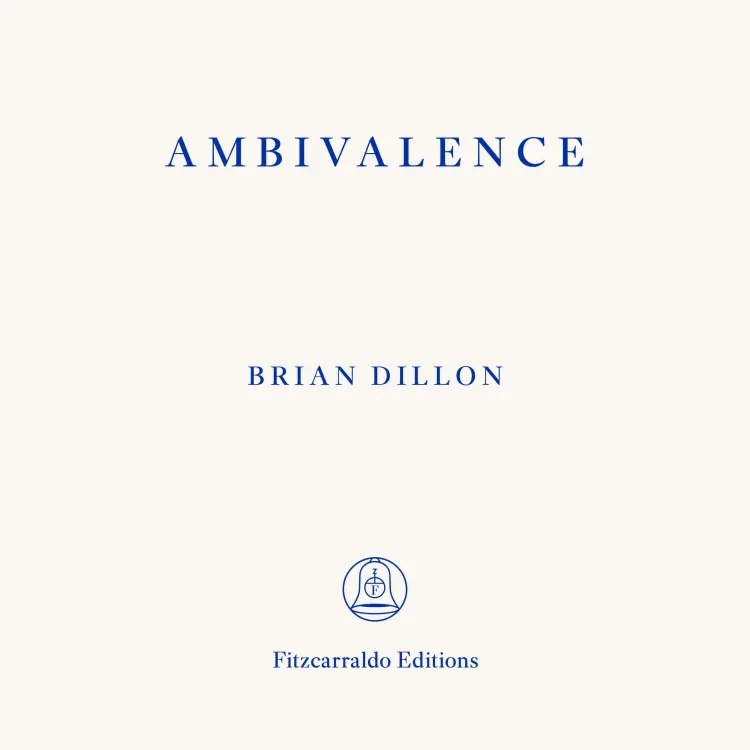
Ambivalence - An Education
Brian Dillon
Unabridged
•
9781804272893
4 horas 54 minutos
• Explícito

*
Apple Books

*
Audible Deutschland

*
BookBeat

*
Google Play Books

*
Nextory

*
Spotify Audiobooks

*
Storytel
Nota: La reproducción de los audiolibros o de las obras de audio en las respectivas plataformas, por ejemplo Spotify, puede generar gastos. Lismio no tiene ninguna influencia sobre qué audiolibros y obras de audio están disponibles en el servicio.
Algunos artículos contienen enlaces de afiliados (marcados con un asterisco *). Si hace clic en estos enlaces y compra productos, recibiremos una pequeña comisión sin coste adicional para usted. Su apoyo ayuda a mantener este sitio en funcionamiento y a seguir creando contenidos útiles. Gracias por su apoyo.
De la editorial
When Brian Dillon was sixteen his mother died and he simply gave up all schoolwork. While he courted exam failure, his real education was going on elsewhere: with books, music, films and television. When at last he made it to university, his head was already full of avant-garde writing, art and ideas. Could academia live up to the hopes and dreams he had invested in it?
Halfway through college his father died, and the stakes of reading and writing seemed even higher. Ambivalence explores what learning meant to its author, what it enabled and denied, between the ages of seventeen and twenty-six, when he left his native Dublin. It's at once a memoir of that city in the 1980s and 1990s, an uncynical portrait of the adolescent and early-adult mind, and an intimate defence of radical thinking about literature and life.
In vivid present-tense fragments, Dillon describes his first encounters with writers such as Virginia Woolf, Walter Benjamin, Samuel Beckett, Roland Barthes and Jacques Derrida. He recalls being seduced by ambivalence, ambiguity and androgyny - on the page and in the life he hoped his reading would transfigure. The era he describes seemed to demand new ways of thinking about aesthetics and politics. Today, when rights are fragile, arts and humanities attacked, and students dismissed as radicals or narcissists, Ambivalence is an argument for the poetic and revolutionary force of changing yourself and even the world by changing what you know.
Halfway through college his father died, and the stakes of reading and writing seemed even higher. Ambivalence explores what learning meant to its author, what it enabled and denied, between the ages of seventeen and twenty-six, when he left his native Dublin. It's at once a memoir of that city in the 1980s and 1990s, an uncynical portrait of the adolescent and early-adult mind, and an intimate defence of radical thinking about literature and life.
In vivid present-tense fragments, Dillon describes his first encounters with writers such as Virginia Woolf, Walter Benjamin, Samuel Beckett, Roland Barthes and Jacques Derrida. He recalls being seduced by ambivalence, ambiguity and androgyny - on the page and in the life he hoped his reading would transfigure. The era he describes seemed to demand new ways of thinking about aesthetics and politics. Today, when rights are fragile, arts and humanities attacked, and students dismissed as radicals or narcissists, Ambivalence is an argument for the poetic and revolutionary force of changing yourself and even the world by changing what you know.
Del mismo autor

También incluido en
-
 Culture & Art39Culture & ArtColección
 -
 Fitzcarraldo Editions30Fitzcarraldo EditionsColección
 -

 Memoirs & Biographies46Memoirs & BiographiesColección
Fitzcarraldo Editions
-
Cover - Marie Darrieussecq - How to Make a Woman
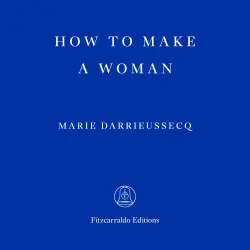 Marie Darrieussecq: How to Make a WomanHow to Make a WomanMarie Darrieussecq
 -
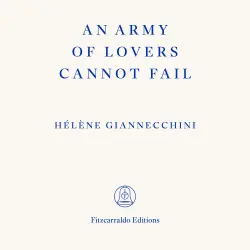
Cover - Hélène Giannecchini - An Army of Lovers Cannot Fail
Hélène Giannecchini: An Army of Lovers Cannot FailAn Army of Lovers Cannot FailHélène Giannecchini