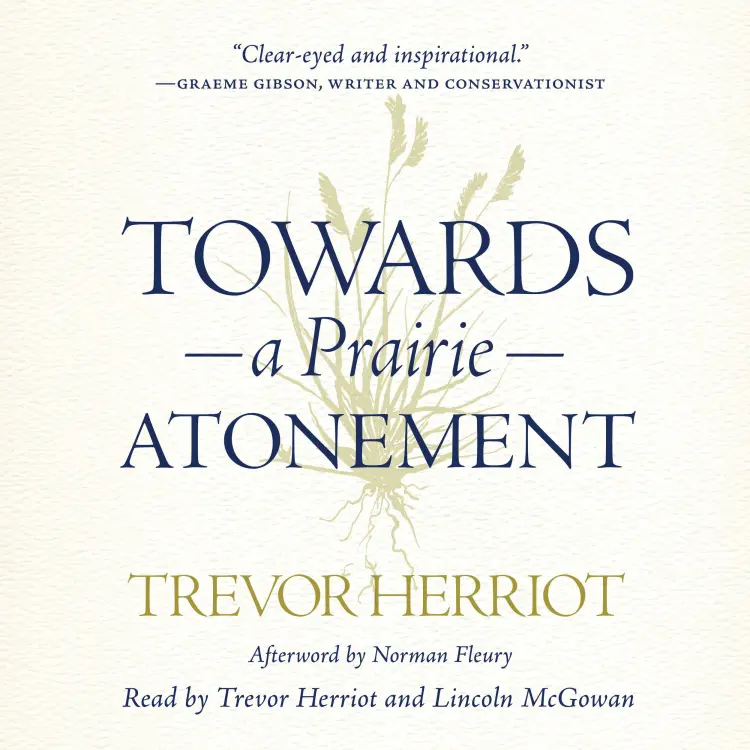
Towards a Prairie Atonement
Trevor Herriot
Unabridged
•
9781779401366
2 horas 56 minutos
Nota: La reproducción de los audiolibros o de las obras de audio en las respectivas plataformas, por ejemplo Spotify, puede generar gastos. Lismio no tiene ninguna influencia sobre qué audiolibros y obras de audio están disponibles en el servicio.
Algunos artículos contienen enlaces de afiliados (marcados con un asterisco *). Si hace clic en estos enlaces y compra productos, recibiremos una pequeña comisión sin coste adicional para usted. Su apoyo ayuda a mantener este sitio en funcionamiento y a seguir creando contenidos útiles. Gracias por su apoyo.
De la editorial
In the wake of colonization, in a landscape of loss and dispossession, can we rediscover ways to share the land with other creatures and one another?
When the government recently tried to abandon its responsibility to protect what little remains of the natural prairie, Trevor Herriot pushed back, only to discover an injustice haunting the lands he was trying to defend. In 1938, when the Métis of Ste. Madeleine returned from working away, they found their homes burnt to the ground and their animals shot. The land they held in common was no longer theirs, but was now controlled by the federal government.
Facing his own responsibility as a descendent of settlers, he connects today's ecological disarray to the legacy of Metis dispossession and the loss of their community lands. With Indigenous and settler people alienated from one another and from the grassland itself, hope and courage are in short supply. This book offers both by proposing an atonement that could again bring people and prairie together.
When the government recently tried to abandon its responsibility to protect what little remains of the natural prairie, Trevor Herriot pushed back, only to discover an injustice haunting the lands he was trying to defend. In 1938, when the Métis of Ste. Madeleine returned from working away, they found their homes burnt to the ground and their animals shot. The land they held in common was no longer theirs, but was now controlled by the federal government.
Facing his own responsibility as a descendent of settlers, he connects today's ecological disarray to the legacy of Metis dispossession and the loss of their community lands. With Indigenous and settler people alienated from one another and from the grassland itself, hope and courage are in short supply. This book offers both by proposing an atonement that could again bring people and prairie together.
Del mismo autor


University of Regina Press
-
Cover - Ian Mosby - Uncertain Harvest - The Future of Food on a Warming Planet
 Ian Mosby: Uncertain Harvest - The Future of Food on a Warming PlanetUncertain Harvest - The Future of Food on a Warming PlanetIan Mosby
 -
Cover - Lyndon Penner - The Way of the Gardener - Lost in the Weeds along the Camino de Santiago
 Lyndon Penner: The Way of the Gardener - Lost in the Weeds along the Camino de SantiagoThe Way of the Gardener - Lost in the Weeds along the Camino de SantiagoLyndon Penner
 -
Cover - James Daschuk - Clearing the Plains - Disease, Politics of Starvation, and the Loss of Indigenous Life
 James Daschuk: Clearing the Plains - Disease, Politics of Starvation, and the Loss of Indigenous LifeClearing the Plains - Disease, Politics of Starvation, and the Loss of Indigenous LifeJames Daschuk
 -
Cover - Harold R. Johnson - Firewater - How Alcohol is Killing My People (And Yours)
 Harold R. Johnson: Firewater - How Alcohol is Killing My People (And Yours)Firewater - How Alcohol is Killing My People (And Yours)Harold R. Johnson