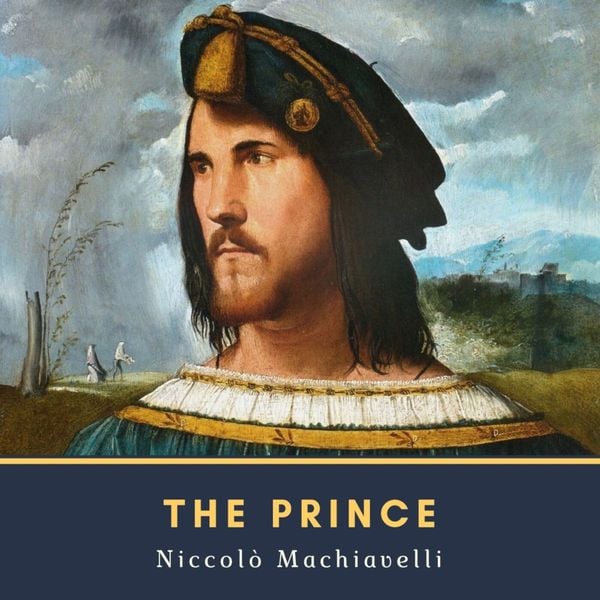
The Prince
Niccolò Machiavelli
Onverkort
•
4057664891044
3 uur 24 minuten

Sommige artikelen bevatten affiliate links (gemarkeerd met een sterretje *). Als je op deze links klikt en producten koopt, ontvangen we een kleine commissie zonder extra kosten voor jou. Uw steun helpt ons deze site draaiende te houden en nuttige inhoud te blijven maken. Hartelijk dank voor uw steun!
Van de uitgever
The Prince (Italian: Il Principe) is a 16th-century political treatise by the Italian diplomat and political theorist Niccolò Machiavelli. From his correspondence, a version appears to have been distributed in 1513, using a Latin title, De Principatibus (Of Principalities). However, the printed version was not published until 1532, five years after Machiavelli's death. This was carried out with the permission of the Medici pope Clement VII, but 'long before then, in fact since the first appearance of The Prince in manuscript, controversy had swirled about his writings'. Although The Prince was written as if it were a traditional work in the mirrors for princes style, it is generally agreed that it was especially innovative. This is partly because it was written in the vernacular Italian rather than Latin, a practice that had become increasingly popular since the publication of Dante's Divine Comedy and other works of Renaissance literature. The Prince is sometimes claimed to be one of the first works of modern philosophy, especially modern political philosophy, in which the 'effectual' truth is taken to be more important than any abstract ideal. It is also notable for being in direct conflict with the dominant Catholic and scholastic doctrines of the time, particularly those concerning politics and ethics. Although it is relatively short, the treatise is the most remembered of Machiavelli's works and the one most responsible for bringing the word 'Machiavellian' into usage as a pejorative. It even contributed to the modern negative connotations of the words 'politics' and 'politician' in western countries. In terms of subject matter it overlaps with the much longer Discourses on Livy, which was written a few years later. In its use of near-contemporary Italians as examples of people who perpetrated criminal deeds for politics, another lesser-known work by Machiavelli which The Prince has been compared to is the Life of Castruccio Castracani.
Van dezelfde auteurs


Parolita Libro
-
Cover - Arthur Conan Doyle - Sherlock Holmes - The Novels
 Arthur Conan Doyle: Sherlock Holmes - The NovelsSherlock Holmes - The NovelsArthur Conan Doyle
 -
Cover - William Shakespeare - Love's Labour's Lost
 William Shakespeare: Love's Labour's LostSeriesLove's Labour's LostWilliam Shakespeare
 -
Cover - Lucy Maud Montgomery - Emily's Quest
 Lucy Maud Montgomery: Emily's QuestSeriesEmily's QuestLucy Maud Montgomery
 -
Cover - Fyodor Dostoevsky - The House of the Dead
 Fyodor Dostoevsky: The House of the DeadThe House of the DeadFyodor Dostoevsky
 -
Cover - William Shakespeare - Much Ado About Nothing
 William Shakespeare: Much Ado About NothingSeriesMuch Ado About NothingWilliam Shakespeare