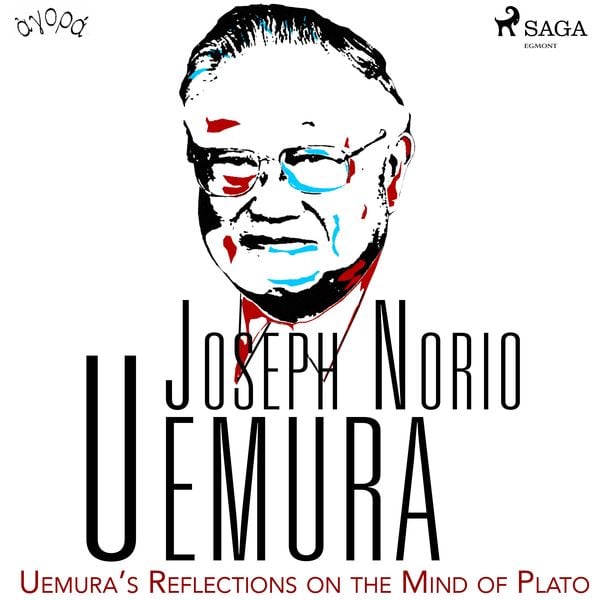
Uemura's Reflections on the Mind of ...
Joseph Norio Uemura
Onverkort
•
9788726425598
4 uur 42 minuten

Sommige artikelen bevatten affiliate links (gemarkeerd met een sterretje *). Als je op deze links klikt en producten koopt, ontvangen we een kleine commissie zonder extra kosten voor jou. Uw steun helpt ons deze site draaiende te houden en nuttige inhoud te blijven maken. Hartelijk dank voor uw steun!
Van de uitgever
'Plato was not a Platonist! I would like to show . . . that anyone who reads the dialogues of Plato without bias or an ax to grind will find a humorous, witty, pleasant friend; and not a desiccated scholarly mandarin. Plato was an open-minded, tolerant, reasonable individual, not a tight-lipped, pietistic, puritan. In a word, Plato was an Athenian, not a Spartan!' In the twenty-four centuries that have passed since the Athenians put Socrates to death, every generation has interpreted the meaning of Plato's work differently. Joseph Uemura guides us through six dialogues in an effort to promote a dialectical quest rather than seek a final resting place. Plato's dialogues treat the big questions that confront any thoughtful person. 'Eythyphro' explores religion, 'Phaedo' reflects on mind, 'Theatetus' examines knowledge, 'Sophist' probes being, 'Phaedrus' reflects on art, and the 'Republic' ponders society. All great literature must be experienced first-hand. Because it is not self-explanatory, it must be interpreted and evaluated. Professor Uemura's reflections serve as a touchstone by which to test every new reading of Plato's work.
Van dezelfde auteurs

SAGA Egmont
-
Cover - R.A. Salvatore - Compilation Dungeons & Dragons 7-10 : ...
 R.A. Salvatore: Compilation Dungeons & Dragons 7-10 : ...SeriesCompilation Dungeons & Dragons 7-10 : ...R.A. Salvatore
 -
Cover - Karin Fossum - Schwarzer Wald
 Karin Fossum: Schwarzer WaldSeriesSchwarzer WaldKarin Fossum
 -
Cover - Emma Olofsson - Yhtä kuoleman edessä
 Emma Olofsson: Yhtä kuoleman edessäSeriesYhtä kuoleman edessäEmma Olofsson
 -
Cover - Ellinor Rafaelsen - För sista gången
 Ellinor Rafaelsen: För sista gångenSeriesFör sista gångenEllinor Rafaelsen
 -
Cover - Emma Ranta - Rakkauden uusi vuosi
 Emma Ranta: Rakkauden uusi vuosiRakkauden uusi vuosiEmma Ranta
 -
Cover - Ellinor Rafaelsen - Trollbunden
 Ellinor Rafaelsen: TrollbundenSeriesTrollbundenEllinor Rafaelsen