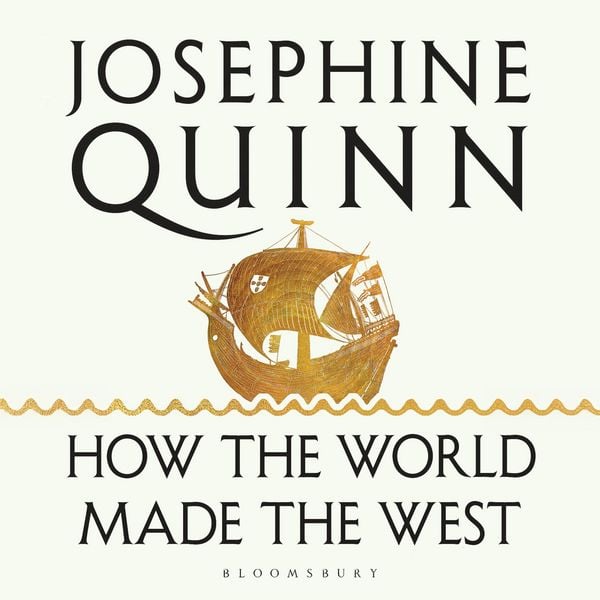
How the World Made the West
Josephine Quinn
Onverkort
•
9781526625755
15 uur 45 minuten

Sommige artikelen bevatten affiliate links (gemarkeerd met een sterretje *). Als je op deze links klikt en producten koopt, ontvangen we een kleine commissie zonder extra kosten voor jou. Uw steun helpt ons deze site draaiende te houden en nuttige inhoud te blijven maken. Hartelijk dank voor uw steun!
Van de uitgever
Bloomsbury presents How the World Made the West by Josephine Quinn, read by Alix Dunmore. A Guardian, Financial Times, New Statesman, The Rest is Politics and Waterstones Highlight for 2024 'Quinn has done a lot more than reinvent the wheel. What we have here is a truly encyclopaedic and monumental account of the ancient world' THE TIMES 'A work of great confidence, empathy, learning and imagination' RORY STEWART 'Bold, beautifully written and filled with insights . . . Extraordinary' PETER FRANKOPAN 'One of the most fascinating and important works of global history to appear for many years' WILLIAM DALRYMPLE The West, the story goes, was built on the ideas and values of Ancient Greece and Rome, which disappeared from Europe during the Dark Ages and were then rediscovered by the Renaissance. But what if that isn't true? In a bold and magisterial work of immense scope, Josephine Quinn argues that the real story of the West is much bigger than this established paradigm leads us to believe. So much of our shared history has been lost, drowned out by the concept – developed in the Victorian era – of separate 'civilisations'. Moving from the Bronze Age to the Age of Exploration, How the World Made the West reveals a new narrative: one that traces the millennia of global encounters and exchange that built what is now called the West, as societies met, tangled and sometimes grew apart. From the creation of the alphabet by Levantine workers in Egypt, who in a foreign land were prompted to write things down in their own language for the first time, to the arrival of Indian numbers in Europe via the Arab world, Quinn makes the case that understanding societies in isolation is both out-of-date and wrong. It is contact and connections, rather than solitary civilisations, that drive historical change. It is not peoples that make history – people do.
Van dezelfde auteurs


Bloomsbury Academic
-
Cover - Katie Fforde - A Cottage in the Country
 Katie Fforde: A Cottage in the CountryA Cottage in the CountryKatie Fforde
 -
Cover - Debra Curtis - Laws of Love and Logic
 Debra Curtis: Laws of Love and LogicLaws of Love and LogicDebra Curtis
 -
Cover - Slavoj Žižek - Surplus-Enjoyment
 Slavoj Žižek: Surplus-EnjoymentSurplus-EnjoymentSlavoj Žižek
 -
Cover - Slavoj Žižek - Christian Atheism
 Slavoj Žižek: Christian AtheismChristian AtheismSlavoj Žižek