
The Communist Manifesto
Karl Marx , Friedrich Engels
Onverkort
•
9782291046455
1 uur 26 minuten

Sommige artikelen bevatten affiliate links (gemarkeerd met een sterretje *). Als je op deze links klikt en producten koopt, ontvangen we een kleine commissie zonder extra kosten voor jou. Uw steun helpt ons deze site draaiende te houden en nuttige inhoud te blijven maken. Hartelijk dank voor uw steun!
Van de uitgever
The Communist Manifesto was conceived as an outline of the basic beliefs of the Communist movement. The authors believed that the European Powers were universally afraid of the nascent movement, and were condemning as 'communist,' people or activities that did not actually conform to what the Communists believed. This Manifesto, then, became a manual for their beliefs. In it we find Marx and Engel's rehearsal of the idea that Capital has stolen away the work of the artisan and peasant by building up factories to produce goods cheaply. The efficiency of Capital depends, then, on the wage laborers who staff the factories and how little they will accept in order to have work. This concentrates power and money in a Bourgeois class that profits from the disunity of workers (Proletarians), who only receive a subsistence wage. If workers unite in a class struggle against the bourgeois, using riot and strikes as weapons, they will eventually overthrow the bourgeois and replace them as a ruling class. Communists further believe in and lay out a system of reforms to transform into a classless, stateless society, thus distinguishing themselves from various flavors of Socialism, which would be content to have workers remain the ruling class after the revolution. The Manifesto caused a huge amount of discussion for its support for a forcible overthrow of the existing politics and society.
Van dezelfde auteurs


Oregan Publishing
-
Cover - Plato , Lewis Carroll , Joseph Conrad , Miguel de Cervantes , F. Scott Fitzgerald - 10 Masterpieces You Have To Listen To ...
 Plato , Lewis Carroll , Joseph Conrad , Miguel de Cervantes , F. Scott Fitzgerald: 10 Masterpieces You Have To Listen To ...10 Masterpieces You Have To Listen To ...Plato , Lewis Carroll , Joseph Conrad , Miguel de Cervantes , F. Scott Fitzgerald
 -
Cover - Edgar Rice Burroughs - Tarzan and the Golden Lion
 Edgar Rice Burroughs: Tarzan and the Golden LionTarzan and the Golden LionEdgar Rice Burroughs
 -
Cover - Edgar Rice Burroughs - The Man-Eater
 Edgar Rice Burroughs: The Man-EaterThe Man-EaterEdgar Rice Burroughs
 -
Cover - Arthur Conan Doyle - The Hound of the baskervilles
 Arthur Conan Doyle: The Hound of the baskervillesThe Hound of the baskervillesArthur Conan Doyle
 -
Cover - H.P Lovecraft , Henry James , Joris-Karl Huysmans , Horace Walpole , Washington Irving - 10 Classic Gothic Works You Should ...
 H.P Lovecraft , Henry James , Joris-Karl Huysmans , Horace Walpole , Washington Irving: 10 Classic Gothic Works You Should ...10 Classic Gothic Works You Should ...H.P Lovecraft , Henry James , Joris-Karl Huysmans , Horace Walpole , Washington Irving
 -
Cover - Horace Walpole - The Castle of Otranto
 Horace Walpole: The Castle of OtrantoThe Castle of OtrantoHorace Walpole
 -
Cover - Joris-Karl Huysmans - The Damned
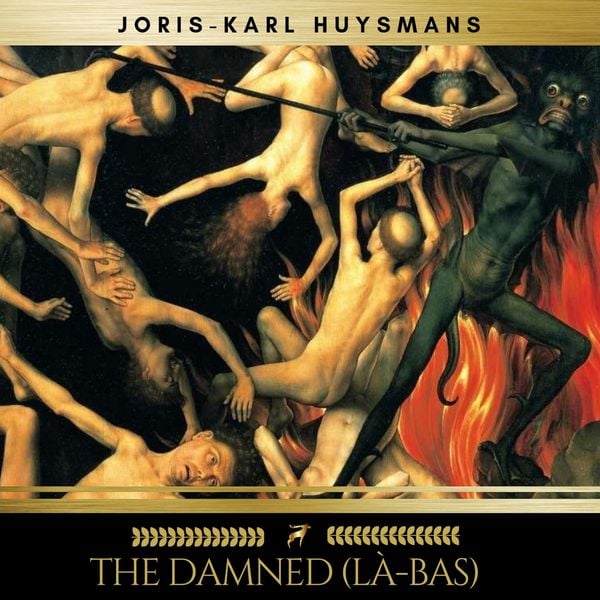 Joris-Karl Huysmans: The DamnedThe DamnedJoris-Karl Huysmans