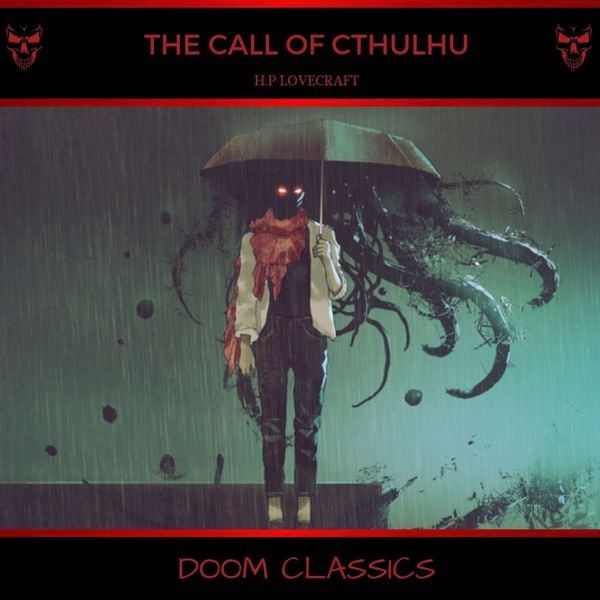
The Call of Cthulhu
Howard Ph. Lovecraft
Onverkort
•
9782291063544
1 uur 7 minuten

Sommige artikelen bevatten affiliate links (gemarkeerd met een sterretje *). Als je op deze links klikt en producten koopt, ontvangen we een kleine commissie zonder extra kosten voor jou. Uw steun helpt ons deze site draaiende te houden en nuttige inhoud te blijven maken. Hartelijk dank voor uw steun!
Van de uitgever
The Call of Cthulhu is one of Lovecraft's best-known works. It is the only story written by Lovecraft in which the extraterrestrial entity Cthulhu himself makes a major appearance. Narrator Francis Wayland Thurston, recounts his discovery of the strange notes left behind by his granduncle, George Gammell Angell, a prominent Professor of Semitic languages at Brown University. At first the story revolves around a small bas-relief sculpture found among the papers, which the narrator describes: 'My somewhat extravagant imagination yielded simultaneous pictures of an octopus, a dragon, and a human caricature.... A pulpy, tentacled head surmounted a grotesque and scaly body with rudimentary wings'. The sculpture is the work of Henry Anthony Wilcox, a student at the Rhode Island School of Design who based the work on delirious dreams of 'great Cyclopean cities of titan blocks and sky-flung monoliths, all dripping with green ooze and sinister with latent horror'. Frequent references to Cthulhu and R'lyeh are found in papers authored by Wilcox. Angell also discovers reports of 'outre mental illnesses and outbreaks of group folly or mania' around the world (in New York City, 'hysterical Levantines' mob police; in California, a Theosophist colony dons white robes to await a 'glorious fulfillment')...
Van dezelfde auteurs


Doom Classics
-
Cover - H.P Lovecraft , Edgar Allan Poe , Arthur Conan Doyle , Algernon Blackwood , Ambrose Bierce - 99 Classic Horror Short Stories, Vol. 1
 H.P Lovecraft , Edgar Allan Poe , Arthur Conan Doyle , Algernon Blackwood , Ambrose Bierce: 99 Classic Horror Short Stories, Vol. 199 Classic Horror Short Stories, Vol. 1H.P Lovecraft , Edgar Allan Poe , Arthur Conan Doyle , Algernon Blackwood , Ambrose Bierce
 -
Cover - H.P Lovecraft - 50 Classic Horror Short Stories Vol: 1
 H.P Lovecraft: 50 Classic Horror Short Stories Vol: 150 Classic Horror Short Stories Vol: 1H.P Lovecraft
 -
Cover - H.P Lovecraft - H. P. Lovecraft: The Complete Fiction
 H.P Lovecraft: H. P. Lovecraft: The Complete FictionH. P. Lovecraft: The Complete FictionH.P Lovecraft
 -
Cover - Howard Ph. Lovecraft - The Dream-Quest of Unknown Kadath
 Howard Ph. Lovecraft: The Dream-Quest of Unknown KadathThe Dream-Quest of Unknown KadathHoward Ph. Lovecraft
 -
Cover - Howard Ph. Lovecraft - The Shadow Out of Time
 Howard Ph. Lovecraft: The Shadow Out of TimeThe Shadow Out of TimeHoward Ph. Lovecraft
 -
Cover - Howard Ph. Lovecraft - The Shadow Over Innsmouth
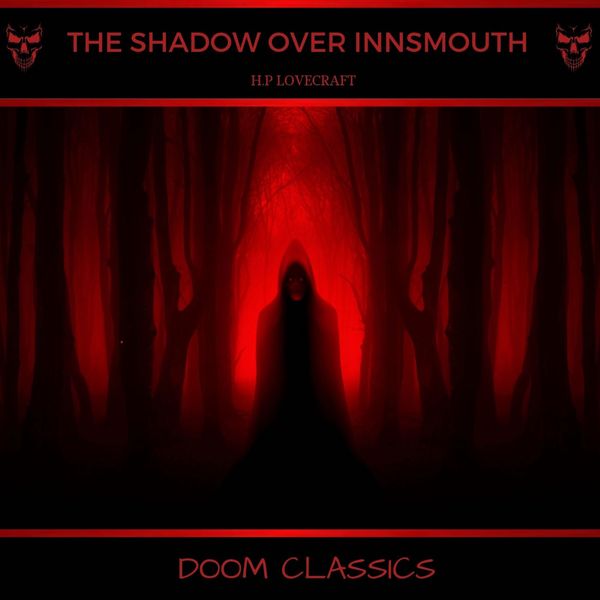 Howard Ph. Lovecraft: The Shadow Over InnsmouthThe Shadow Over InnsmouthHoward Ph. Lovecraft
 -
Cover - Howard Ph. Lovecraft - The Whisperer in Darkness
 Howard Ph. Lovecraft: The Whisperer in DarknessThe Whisperer in DarknessHoward Ph. Lovecraft