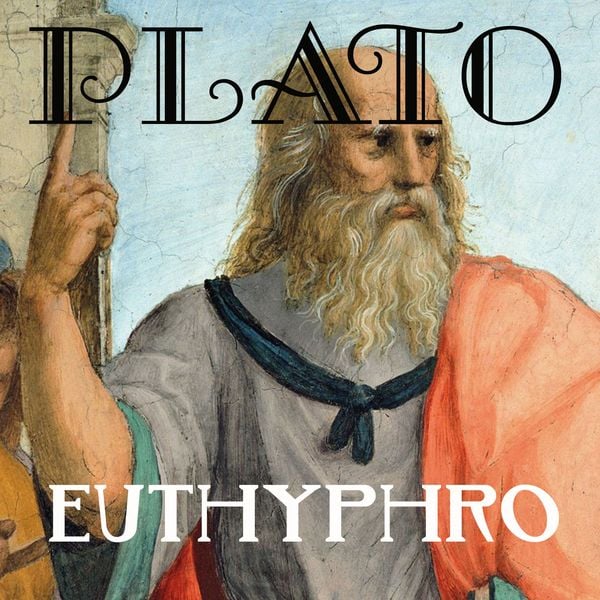
Euthyphro
Plato
Onverkort
•
4099995462456
49 minuten

Sommige artikelen bevatten affiliate links (gemarkeerd met een sterretje *). Als je op deze links klikt en producten koopt, ontvangen we een kleine commissie zonder extra kosten voor jou. Uw steun helpt ons deze site draaiende te houden en nuttige inhoud te blijven maken. Hartelijk dank voor uw steun!
Van de uitgever
Euthyphro by Plato is a Socratic dialogue whose events occur in the weeks before the trial of Socrates (399 BC), between Socrates and Euthyphro.The dialogue covers subjects such as the meaning of piety and justice. As is common with Plato's earliest dialogues, it ends in aporia. In this dialogue, Socrates meets Euthyphro at the porch of the archon basileus (the 'king magistrate') at that time. Socrates tells him that he is preparing to go to court against the charges of Meletus on the grounds of impiety. Euthyphro tells Socrates that he is going to court himself to prosecute his father for binding a worker in chains and leaving him to die. This has granted him the ire of his own family who believe his father was in the right. The worker had killed a fellow worker, which they believe exempts his father from liability for leaving him bound in the ditch to starve to death. Since Euthyphro seems assured of himself, Socrates asks him to define piety. His help will clarify Socrates' case in the courtroom. If Socrates is asked to define piety, he can simply rely on Euthyphro's definition. This however leads to the main dilemma of the dialogue when the two cannot come to a satisfactory conclusion. Is something pious because the gods approve of it or do the gods approve of it because it is pious? This aporic ending has led to one of the longest theological and meta-ethical debates in history.
Van dezelfde auteurs


Strelbytskyy Multimedia Publishing
-
Cover - A. S. Pushkin - Baryishnya-krestyanka
 A. S. Pushkin: Baryishnya-krestyankaBaryishnya-krestyankaA. S. Pushkin
 -
Cover - Alexander Pushkin - Istoriya Pugachyova
 Alexander Pushkin: Istoriya PugachyovaIstoriya PugachyovaAlexander Pushkin
 -
Cover - Alexander Pushkin - Pesn' o veschem Olege
 Alexander Pushkin: Pesn' o veschem OlegePesn' o veschem OlegeAlexander Pushkin
 -
Cover - Taras Shevchenko - Kobzar. Za vydannyam 1840 roku taras ...
 Taras Shevchenko: Kobzar. Za vydannyam 1840 roku taras ...Kobzar. Za vydannyam 1840 roku taras ...Taras Shevchenko
 -
Cover - Alexander Pushkin - Roman v pismah
 Alexander Pushkin: Roman v pismahRoman v pismahAlexander Pushkin