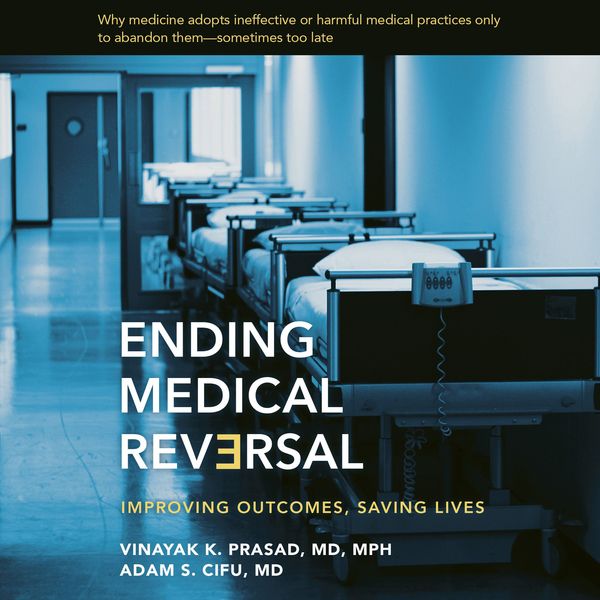
A Johns Hopkins Press Health Book
Ending Medical Reversal
Vinayak K. Prasad , Adam S. Cifu
Onverkort
•
9781421451084
8 uur 12 minuten

Sommige artikelen bevatten affiliate links (gemarkeerd met een sterretje *). Als je op deze links klikt en producten koopt, ontvangen we een kleine commissie zonder extra kosten voor jou. Uw steun helpt ons deze site draaiende te houden en nuttige inhoud te blijven maken. Hartelijk dank voor uw steun!
Van de uitgever
Medications such as Vioxx and procedures such as vertebroplasty for back pain are among the medical 'advances' that turned out to be dangerous or useless. What Dr. Vinayak K. Prasad and Dr. Adam S. Cifu call medical reversal happens when doctors start using a medication, procedure, or diagnostic tool without a robust evidence base—and then stop using it when it is found not to help, or even to harm, patients. In Ending Medical Reversal, Drs. Prasad and Cifu narrate fascinating stories from every corner of medicine to explore why medical reversals occur, how they are harmful, and what can be done to avoid them. They explore the difference between medical innovations that improve care and those that only appear to be promising. They also outline a comprehensive plan to reform medical education, research funding and protocols, and the process for approving new drugs that will ensure that more of what gets done in doctors' offices and hospitals is truly effective.
Van dezelfde auteurs


Johns Hopkins University Press
-
Cover - Anthony Feinstein - Mind, Mood, and Memory
 Anthony Feinstein: Mind, Mood, and MemoryMind, Mood, and MemoryAnthony Feinstein
 -
Cover - Bryan Alexander - Universities on Fire
 Bryan Alexander: Universities on FireUniversities on FireBryan Alexander
 -
Cover - Rebecca Pope-Ruark - Unraveling Faculty Burnout
 Rebecca Pope-Ruark: Unraveling Faculty BurnoutUnraveling Faculty BurnoutRebecca Pope-Ruark
 -
Cover - Jonathan Zimmerman - The Amateur Hour
 Jonathan Zimmerman: The Amateur HourThe Amateur HourJonathan Zimmerman
 -
Cover - Martin F. Shapiro - The Present Illness
 Martin F. Shapiro: The Present IllnessThe Present IllnessMartin F. Shapiro